ADSD Consulting Private Limited
How to Choose the Right Activated Carbon for Water Treatment Applications
Choosing the right grade of Activated Carbon is an important decision in any Water Treatment application. Selecting an unsuitable grade can lead to filter clogging, excessive attrition during backwashing, inefficient adsorption and poor contaminant removal.
Activated Carbon for Water Treatment is widely used in municipal Drinking Water plants, Industrial Process Water systems, Effluent Treatment plants and recreational water applications. However, the term “Activated Carbon” covers a wide range of products that differ in raw materials, particle sizes, pore structures and adsorption properties.
This guide explains how Activated Carbon works in Water Treatment, the differences between Granular Activated Carbon (GAC) and Powdered Activated Carbon (PAC), the key specifications buyers should evaluate and how to select a reliable Activated Carbon Supplier.
How Activated Carbon for Water Treatment Works
Activated Carbon removes contaminants primarily through a process known as adsorption. Dissolved molecules are attracted to and retained on the Carbon’s extensive internal surface area, which is developed through controlled activation and the formation of a highly porous structure.
To understand how ADSD develops this porous structure, explore the Activated Carbon Manufacturing Process.
In Water Treatment, Activated Carbon is commonly used to reduce:
Taste and odour compounds
Residual chlorine and chloramines
Colour
Many dissolved organic compounds, including certain pesticides and Industrial Solvents
Organic load in Industrial Effluents
Activated Carbon is not designed to remove every type of contaminant. It is generally less effective for dissolved salts, hardness, nitrates and most microorganisms, which require other treatment technologies. Therefore, understanding the specific contaminants that need to be removed is the first step in selecting the appropriate Activated Carbon.
For additional technical information on Granular Activated Carbon and its use in Drinking Water Treatment, refer to the U.S. EPA – Overview of Drinking Water Treatment Technologies
Granular vs Powdered Activated Carbon
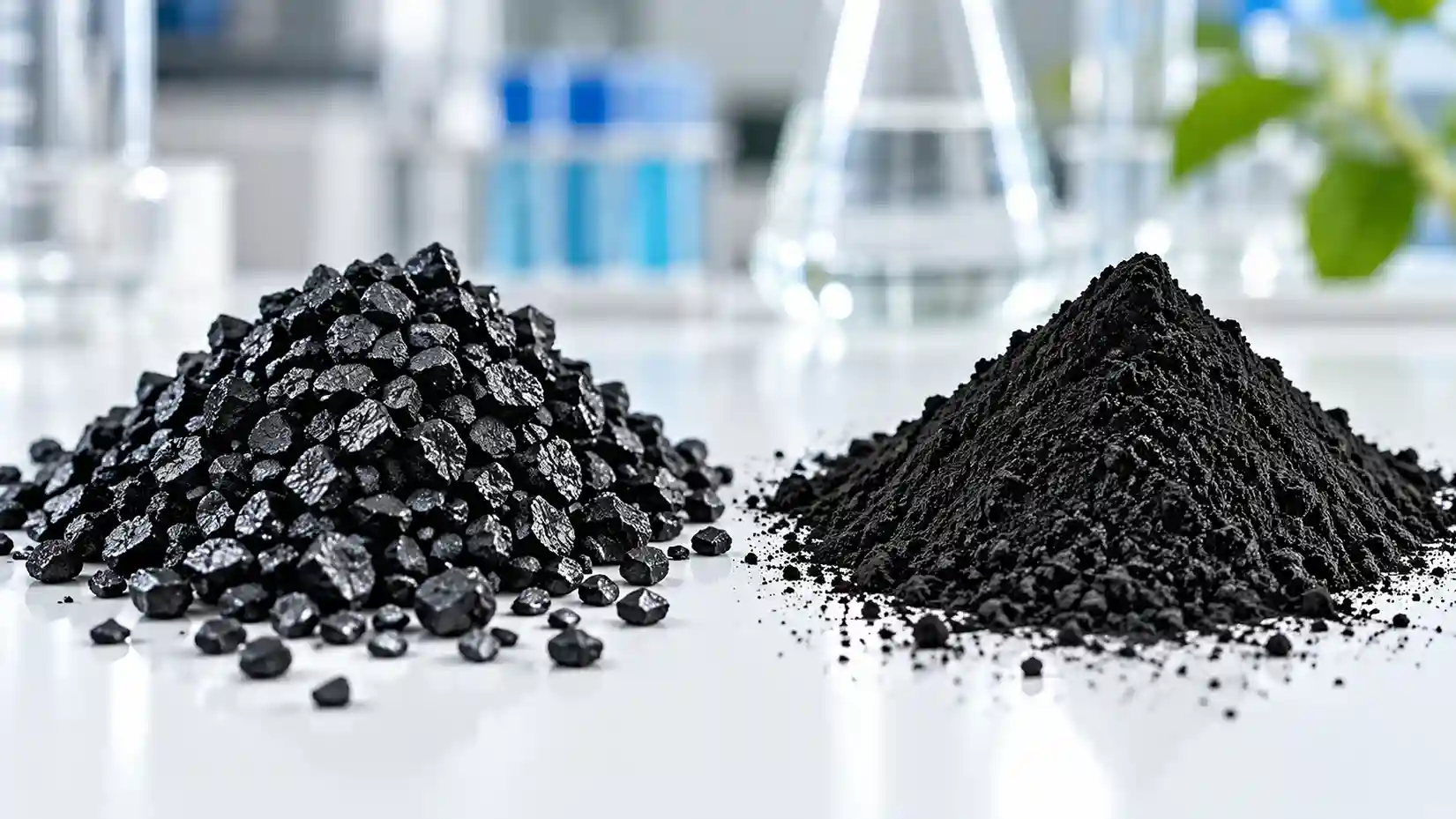
The physical form of Activated Carbon determines how it is applied within a Water Treatment system. The two primary forms are Granular Activated Carbon (GAC) and Powdered Activated Carbon (PAC). Pelletized Activated Carbon is also used in selected applications, particularly where low pressure drop and reduced dust generation are required.
| Feature | Granular Activated Carbon (GAC) | Powdered Activated Carbon (PAC) | Pellet Activated Carbon |
|---|---|---|---|
| Form | Irregular granules | Fine powder | Cylindrical pellets |
| How it is used | Packed in fixed-bed filters or columns | Dosed directly into water, then removed by settling or filtration | Packed in fixed beds |
| Typical use | Continuous treatment of Drinking Water, Process Water and Effluent polishing | Seasonal or emergency control of taste, odour and organic spikes | Applications requiring low pressure drop and low dust |
| Reuse | Can often be reactivated or replaced in batches | Single use; removed with sludge | Can often be reactivated |
| Equipment needed | Filter vessels or contactors | Dosing system | Filter vessels |
For a detailed overview of different Activated Carbon grades, see Types of Activated Carbon.
As a general guideline, GAC is suitable for plants requiring continuous, long-term treatment, while PAC provides flexibility for occasional or seasonal contamination events without requiring additional fixed-bed filtration infrastructure.
The World Health Organization (WHO) – Guidelines for Drinking-water Quality provides additional information on Activated Carbon adsorption and the use of PAC and GAC in Water Treatment.
Key Specifications to Check
A Technical Data Sheet provides considerably more information than a product name alone. When selecting Water Treatment Activated Carbon, buyers should carefully evaluate the specifications that directly influence adsorption performance, filtration efficiency and operational life.
| Parameter | What it indicates | Why it matters in Water Treatment |
|---|---|---|
| Iodine Number | Volume of small pores (micropores) | Higher values generally indicate greater capacity for smaller organic molecules |
| Methylene Blue Value | Capacity for larger molecules | Useful where colour and larger organic molecules need to be removed |
| Particle Size (Mesh) | Size range of granules or fineness of powder | Influences pressure drop, contact time and backwashing |
| Hardness / Abrasion Resistance | Mechanical strength | Higher hardness reduces breakdown, fines and material losses |
| Ash Content | Mineral matter in the Carbon | Can influence adsorption performance and potential leaching |
| Moisture | Water content at delivery | Affects the actual quantity of Carbon being purchased by weight |
| Apparent Density | Weight per unit volume | Determines the quantity of Carbon required to fill a filter bed |
| pH | Acidity or alkalinity of the Carbon | Can temporarily influence water pH after installation of a fresh Carbon bed |
For detailed information about Activated Carbon parameters and specifications, visit the Activated Carbon Specifications page.
For Drinking Water projects, buyers may also consider recognised standards and applicable certifications. Examples include AWWA B604 for Granular Activated Carbon, AWWA B600 for Powdered Activated Carbon and NSF/ANSI/CAN 61 for components that come into contact with Drinking Water. Applicable requirements should always be confirmed according to the destination country, project specifications and intended application.
For further information on industry standards, refer to the American Water Works Association (AWWA) Standards, including B600 for Powdered Activated Carbon and B604 for Granular Activated Carbon.
Matching the Carbon to Your Application
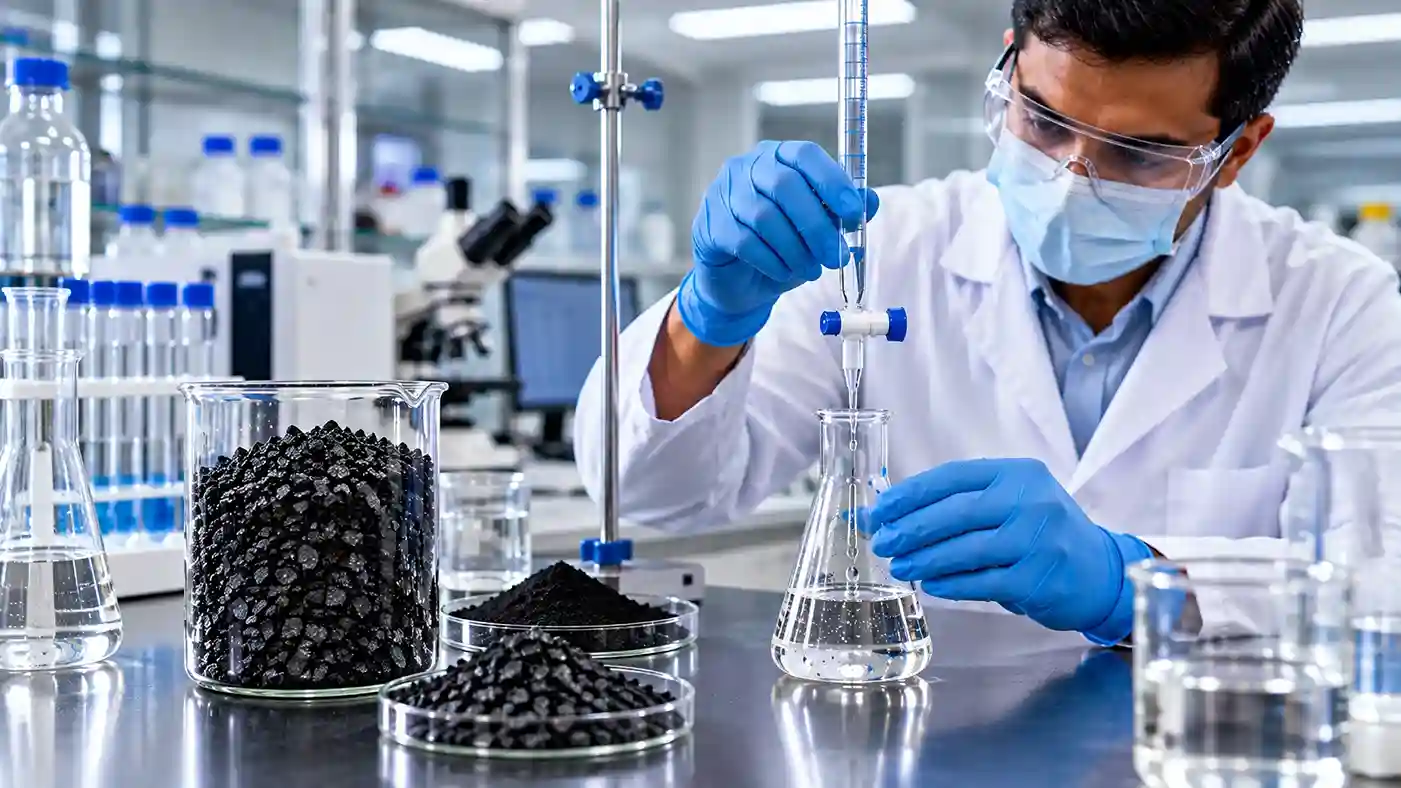
The appropriate Activated Carbon grade depends on the contaminants being treated, the process conditions and the design of the Water Treatment system.
Municipal Drinking Water
GAC filters are widely used for continuous removal of taste, odour, chlorine and trace organic compounds. PAC may be used during seasonal events such as algal blooms or temporary contamination incidents.
For Municipal Drinking Water applications, purity, low ash content, consistent particle size and compliance with applicable drinking water standards are important considerations.
Industrial Process Water
Industries including Beverages, Food Processing, Pharmaceuticals and boiler feed systems use Activated Carbon to reduce chlorine and organic contaminants that may affect product quality or damage downstream equipment such as reverse osmosis membranes.
GAC installed in pressure filters is a common configuration for continuous Process Water Treatment.
Wastewater and Effluent Treatment
In Effluent Treatment Plants, Activated Carbon is often used as a polishing stage following Biological Treatment. It can help reduce colour, COD and specific organic pollutants before discharge or reuse.
Depending on the plant design and variation in the Effluent, both PAC dosing systems and GAC columns may be suitable.
Swimming Pools and Recreational Water
Activated Carbon can help reduce chloramines and organic contaminants responsible for unpleasant odours and irritation. Acid-Washed Activated Carbon may be preferred in applications where low ash content and higher carbon purity are important.
For a broader overview of Water Treatment applications, visit ADSD’s Water Treatment of Activated Carbon page.
How to Choose an Activated Carbon Supplier
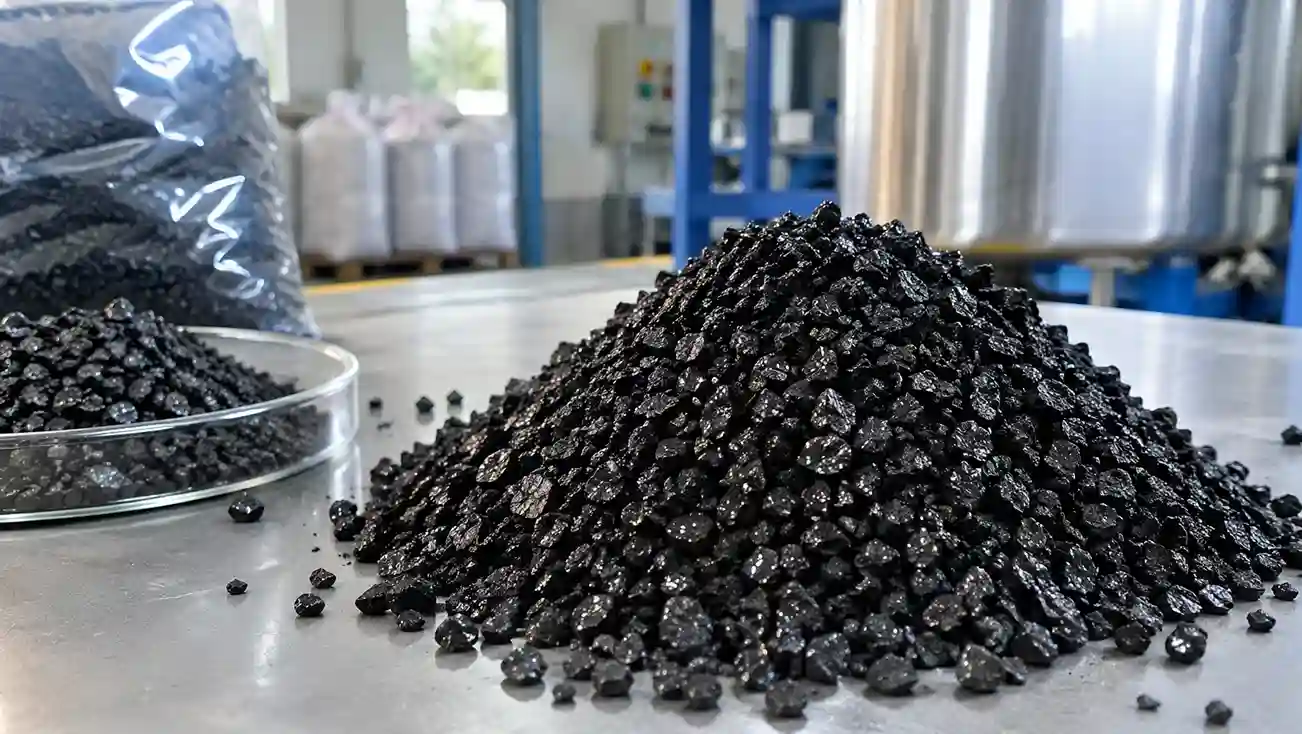
Two Activated Carbon products with similar Technical Data Sheets can deliver different results under actual operating conditions. When evaluating an Activated Carbon Supplier or Manufacturer, consider the following factors:
Raw Material and Consistency: Understand the source of the Activated Carbon and how the supplier maintains consistency from batch to batch.
Test Certificates: Each shipment should be supported by a Certificate of Analysis covering the agreed specifications.
Samples and Trials: A reliable Supplier should be able to provide samples for laboratory or pilot testing before a bulk purchase.
Technical Support: The Supplier should determine the appropriate Grade, Mesh size, dosage and Application-specific requirements rather than simply quoting a price.
Packing and Logistics: Evaluate available packing options, including small bags and jumbo bags, as well as the Supplier’s experience with Export Documentation and International Shipping.
Manufacturer or Trader: Purchasing directly from an Activated Carbon Manufacturer can provide greater control over Specifications, Traceability, Production Consistency and supply.
If you are looking for a reliable Activated Carbon Manufacturer from India, ADSD Adsorbents & Specialities offers Granular, Powdered, Acid-Washed and Pelletized Activated Carbon for diverse Industrial and Environmental Applications.
Why Coconut Shell Activated Carbon from India?
Coconut Shell Activated Carbon is widely used in Water Treatment because it typically provides a high proportion of micropores, good mechanical hardness and low ash content.
These characteristics make Coconut Shell Activated Carbon particularly suitable for applications where efficient adsorption, durability and consistent performance are important.
ADSD Adsorbents & Specialities, part of ADSD Group, manufactures Coconut Shell-Based, Steam Activated Carbon in Granular, Powder and Pellet forms. The company serves Water and Wastewater Treatment customers across India and International Markets, with a growing focus on African markets including Kenya, Ghana and Morocco.
To learn more about ADSD’s Activated Carbon Business and product range, visit the ADSD Activated Carbon page.
Conclusion
Selecting the right Activated Carbon for Water Treatment depends on three fundamental factors: the contaminants you need to remove, the design and operating conditions of your treatment system and the consistency with which your supplier can deliver the required specifications.
Start by defining your Treatment objective. Then select the appropriate Carbon form—GAC, PAC, or Pelletized Carbon—based on your system requirements. Compare Technical Data Sheets using parameters such as Iodine Number, Methylene Blue Value, Particle Size, Hardness, Ash Content, Moisture and Apparent Density.
Before committing to a bulk order, laboratory or pilot-scale testing can help confirm that the selected Activated Carbon performs effectively under actual application conditions.
If you are sourcing Granular or Powdered Activated Carbon for Drinking Water, Process Water or Effluent Treatment, contact ADSD at info@adsd.in to discuss your requirements and request samples.
FAQs
What is Activated Carbon used in Water Treatment?
Activated Carbon is used to remove taste, odour, chlorine, colour and many dissolved organic compounds through the adsorption process.
Which is better for Water Treatment, GAC or PAC?
GAC is generally suitable for continuous treatment in fixed-bed filters, while PAC is suitable for occasional or seasonal contamination because it can be dosed when required.
What does Iodine Number mean for Activated Carbon?
Iodine Number is an indicator associated with the volume of micropores in Activated Carbon. Higher values generally indicate greater adsorption capacity for smaller organic molecules.
Why is Coconut Shell Activated Carbon used for Water Treatment?
Coconut Shell Activated Carbon typically provides a high proportion of micropores, good mechanical hardness and low ash content, making it suitable for Drinking Water and Process Water applications.
What should I ask an Activated Carbon Supplier before ordering?
Ask for a Technical Data Sheet, Certificate of Analysis, Product Samples, Packing options, Application-specific recommendations and information about the Supplier’s Export and International Supply experience.
About Us
ADSD Consulting Private Limited
ADSD Adsorbents & Specialities
Private Limited
Delivering integrated Engineering, EPC, Consulting, Chemicals & Supply Chain and Activated Carbon solutions to Industries Worldwide.
Engineering & EPC Business
Chemicals & Supply Chain Business
Contact Us
- info@adsd.in
- +91 9958582437
-
Anthurium Office Space, 1103-1105, Sector-73, Noida,
Pin 201307, NCR Delhi, India
Download Brochure

About
ADSD Group, headquartered in Noida/Delhi (NCR), India, ADSD Group began its journey in 2017 with the establishment of its flagship company ADSD Consulting Pvt. Ltd.
Engineering & EPC
Supply Chain
Activated Carbon Business
Quick Link
Contact Us
- info@adsd.in
- +91 96506 93468
-
Anthurium Office Space, 1103-1105, Sector-73, Noida,
Pin 201307, NCR Delhi, India
Download Brocher
Copyright © 2026 All rights reserved. Powered by ADSD Group