ADSD Consulting Private Limited
Engineering, Procurement, and Construction (EPC): A Complete Guide
Industrial EPC Projects require coordinated engineering, reliable equipment procurement, skilled construction teams, and effective project management. Whether developing a chemical process plant, manufacturing facility, renewable energy project, or industrial infrastructure, businesses need a structured approach to move from concept to commissioning.
Engineering, Procurement, and Construction (EPC) is a project delivery model in which a contractor takes responsibility for the agreed engineering, procurement, and construction scope under a single contract. Depending on the project requirements and contract terms, the scope may also include testing, commissioning, start-up, performance testing, and final handover.
By integrating these activities, the EPC model improves coordination, clarifies responsibilities, manages project schedules, and controls costs. It can be particularly useful for industrial developments involving complex equipment, process systems, utilities, and multiple engineering disciplines.
In this guide, we explain what EPC means, how the EPC process works, its key benefits, the industries that use EPC services, and the factors businesses should consider when selecting an EPC contractor. Industrial EPC Projects help businesses develop industrial facilities through coordinated engineering, procurement, construction, and commissioning. A structured EPC approach brings these activities together to support project planning, quality control, cost management, and timely execution according to the agreed project scope.
What Is Engineering, Procurement, and Construction (EPC)?
Engineering, Procurement, and Construction is a project delivery model that combines three major activities under one contractual framework.
Engineering: Developing the technical designs, specifications, drawings, calculations, and project documentation.
Procurement: Sourcing equipment, machinery, materials, and services required to execute the project.
Construction: Carrying out site works, equipment installation, erection, integration, and other activities defined in the project scope.
Depending on the contract, the EPC contractor may also manage pre-commissioning, testing, commissioning, start-up, performance guarantee tests, and project handover.
Unlike an arrangement in which the client separately manages multiple engineering consultants, suppliers, and construction contractors, an EPC model establishes a defined point of responsibility for the contracted scope.
The exact allocation of design responsibility, cost risk, schedule risk, testing obligations, and performance guarantees depends on the contract. Therefore, the project scope, deliverables, acceptance criteria, exclusions, and responsibilities should be clearly documented before execution begins.
Businesses planning industrial developments can explore ADSD Group’s Engineering & EPC Services for integrated engineering and project execution support.
How Does the EPC Process Work?
An EPC project follows a coordinated sequence of activities, from defining the project requirements to delivering a completed facility. The precise workflow varies according to the industry, project complexity, technology, and contractual scope. Successful Industrial EPC Projects depend on clear deliverables, coordinated planning, timely procurement, and effective communication throughout each execution stage.

1. Project Planning and Feasibility
The planning phase establishes the project objectives, production requirements, technical scope, budget, timeline, and implementation strategy.
Typical activities include:
Understanding the client’s requirements and production objectives
Conducting feasibility studies and preliminary assessments
Evaluating site conditions and utility availability
Assessing technical and commercial risks
Preparing preliminary cost estimates and project schedules
Identifying regulatory, environmental, and safety requirements
Effective planning provides a clear basis for engineering decisions, procurement planning, resource allocation, and project execution.

2. Engineering and Design
The engineering phase converts project requirements into technical designs and specifications that guide procurement and construction.
Depending on the facility, engineering disciplines may include:
Process Engineering and Technology Selection
Civil and Structural Engineering
Mechanical Engineering
Electrical Engineering
Instrumentation and Control Systems
Plant Layout and Utility Planning
Equipment Specifications and Technical Documentation
Three-Dimensional (3D) Plant Design, where required
Basic and Detailed Engineering help define equipment requirements, construction interfaces, material specifications, and installation requirements before site execution.
Explore ADSD Group’s Engineering Services for more information about engineering support for industrial projects.
3. Procurement and Supply Chain Management
The procurement phase ensures that the equipment, machinery, materials, and services specified for the project are sourced and delivered according to approved requirements.
Typical procurement activities include:
Vendor identification and qualification
Technical and commercial bid evaluation
Supplier selection and purchase order management
Review of equipment specifications and documentation
Quality inspections and Factory Acceptance Testing (FAT), where applicable
Manufacturing and fabrication coordination
Logistics, transportation, and delivery planning
Material tracking and inventory coordination
Effective procurement connects engineering requirements with construction schedules. Late deliveries, specification mismatches, and poor supplier coordination can disrupt site activities and increase project costs.
ADSD Group’s Industrial Supply Chain Business supports sourcing and supply coordination for industrial requirements.
4. Construction, Erection, and Installation
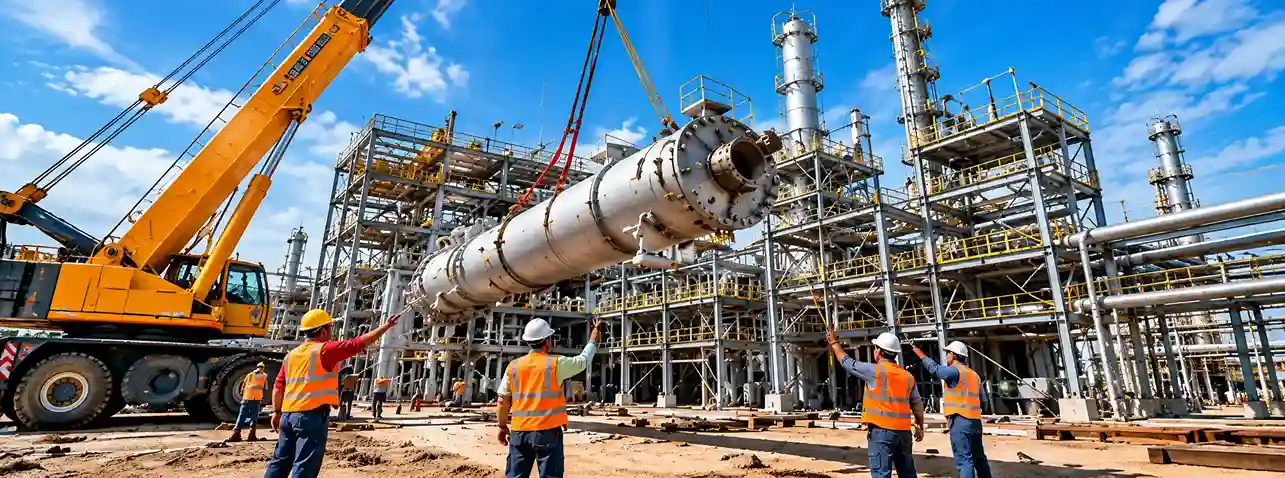
During construction, approved engineering designs are translated into a physical facility.
Depending on the project scope, activities may include:
Civil works and foundation construction
Structural steel fabrication and erection
Mechanical equipment installation
Piping and utility installation
Electrical and instrumentation works
Integration of process and auxiliary systems
Site supervision and progress monitoring
Quality inspections and safety management
Coordination between engineering, procurement, and construction teams is essential to manage interfaces, resolve technical issues, and maintain the project schedule.
5. Pre-Commissioning, Testing, and Commissioning
After installation, systems are inspected and prepared for operational testing. The specific tests depend on the facility, equipment, applicable standards, and contractual requirements.
Activities may include:
Mechanical completion checks
Equipment and system inspections
Electrical testing and instrument calibration
Verification of control systems and safety interlocks
Utility and process-system checks
Functional and performance testing
Identification and closure of outstanding defects
Commissioning verifies that the installed systems operate according to the defined requirements before the facility proceeds to start-up or handover, as applicable.
6. Start-Up, Performance Testing, and Project Handover
Where included in the contract, start-up and performance testing confirm that the facility is ready to move into the agreed operating phase.
The handover process may include:
Completion of contractual inspection requirements
Verification of agreed performance criteria
Submission of operating manuals and technical documentation
Delivery of as-built drawings and relevant records
Operator training, where specified
Closure of outstanding work and punch-list items
Handover documentation and warranty information
Clearly defined acceptance criteria and documentation requirements help both the client and contractor understand when the project is ready for handover.
For integrated execution, explore ADSD Group’s Turnkey & EPC Projects Business.
Key Benefits of Engineering, Procurement, and Construction (EPC)
Businesses select EPC delivery when they need coordinated execution and a clearly defined contractual framework for complex projects. The actual benefits depend on the scope, contract terms, project planning, and capabilities of the selected contractor.
7 Powerful Benefits of Industrial EPC Projects
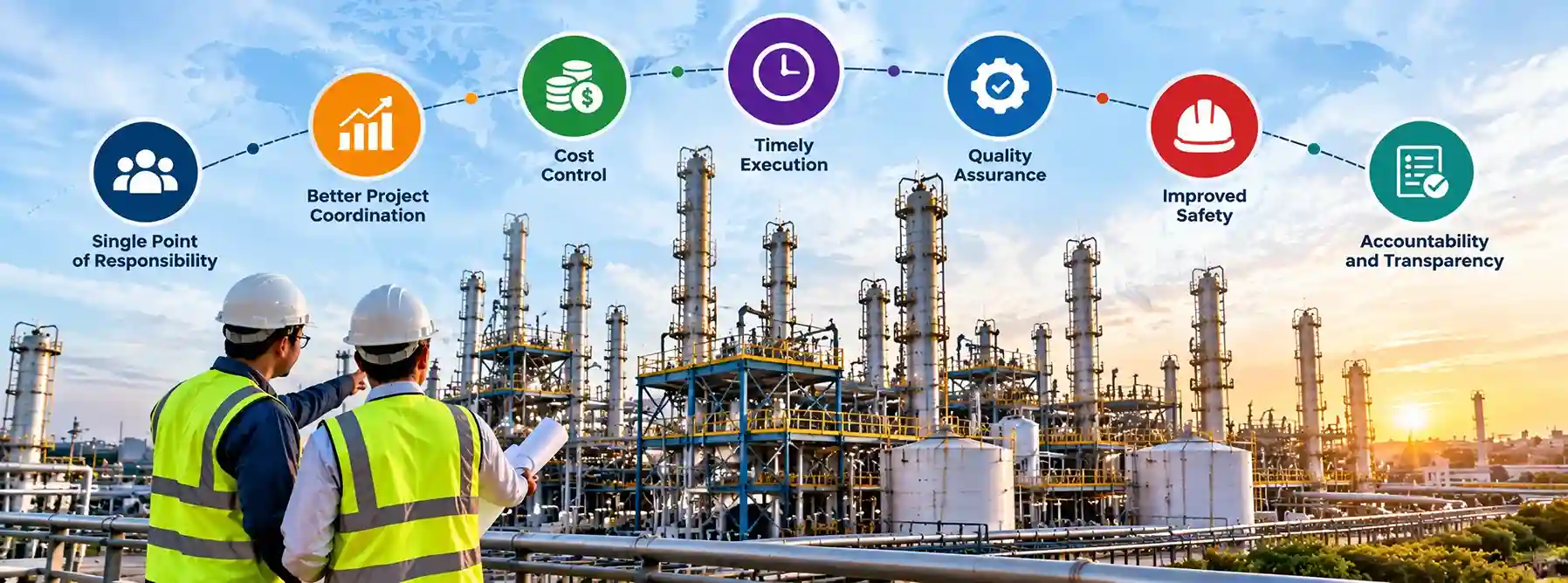
Industrial EPC Projects offer several potential benefits when engineering, procurement, and construction are managed through a coordinated project delivery approach. The 7 powerful benefits include clearer project responsibilities, better cost management, coordinated scheduling, consistent quality control, improved safety management, efficient communication, and streamlined project execution. The actual results depend on the project scope, contract terms, planning, and capabilities of the EPC contractor.
Single Point of Responsibility
An EPC arrangement gives the client a defined contractual point of contact for the agreed project scope. This can simplify communication, clarify responsibilities, and improve coordination between engineering, procurement, and construction teams.
When evaluating Industrial EPC Projects, businesses should assess an EPC contractor’s relevant industry experience, engineering capabilities, procurement network, construction expertise, safety procedures, and project management systems. These factors help determine whether the contractor can meet the project’s technical requirements and delivery expectations.
Better Cost Management
Integrated planning helps align technical decisions, procurement requirements, and construction activities with the project budget.
Cost-management measures may include accurate estimates, competitive supplier evaluation, material planning, change control, and regular cost monitoring. Final cost certainty depends on the contract structure, scope definition, and treatment of changes and unforeseen conditions.
Coordinated Project Scheduling
Engineering, procurement, and construction schedules can be planned together to identify dependencies and manage critical activities. Where appropriate, selected tasks can progress in parallel, provided that technical information and approvals are available.
This coordination can help reduce avoidable delays and improve schedule visibility.
Consistent Quality Management
Establish quality requirements before procurement and construction begin. Engineering reviews, material inspections, equipment testing, construction inspections, and commissioning checks help verify that deliverables meet the approved specifications.
Quality responsibilities and acceptance procedures should be documented in the project quality plan and contract.
Improved Safety and Risk Management
Industrial EPC projects involve technical, construction, equipment, and operational risks. Structured risk assessments, method statements, permit-to-work procedures, appropriate Personal Protective Equipment (PPE), workforce training, and site inspections can help manage these risks.
The client and contractor should clearly define their respective health, safety, environmental, and regulatory responsibilities.
More Efficient Project Coordination
Integrating engineering, procurement, and construction can reduce communication gaps between project teams. Coordinated documentation, progress reporting, technical reviews, and change management support more informed decisions throughout execution.
Industries That Use EPC Services
EPC services are used across industrial sectors where projects require multidisciplinary engineering, equipment integration, construction management, and commissioning.
Chemical Process Plants
Chemical Process Plants require coordinated process design, equipment selection, piping, instrumentation, utilities, and safety systems. EPC delivery can help integrate these elements into a complete facility.
Fertilizer and Agrochemical Plants
Fertilizer and Agrochemical projects may involve process technology, specialized equipment, material handling, storage, utilities, and environmental controls. Project-specific engineering and procurement coordination are essential to meet the defined operating requirements.
Oil and Gas
Oil and Gas facilities can include processing units, storage systems, pipelines, utility infrastructure, and associated equipment. Project execution requires careful management of technical interfaces, safety requirements, and commissioning procedures.
Energy and Renewable Energy
Energy projects may involve power-generation facilities, supporting utilities, electrical systems, and balance-of-plant infrastructure. EPC delivery can coordinate engineering, equipment sourcing, installation, and testing according to project requirements.
Water and Wastewater Treatment
Industrial and municipal water projects require the integration of treatment processes, tanks, pumps, piping, electrical systems, instrumentation, and control equipment. EPC coordination helps bring these systems together for testing and operation.
Pharmaceutical and Manufacturing Facilities
Pharmaceutical and Manufacturing projects may require specialized production equipment, cleanroom systems, HVAC, utilities, automation, and documented quality controls. Engineering and installation requirements should reflect the intended process and applicable regulations.
ADSD Group provides Engineering & EPC capabilities for industrial facilities and projects. Explore our Engineering & EPC Services to understand the areas in which we support clients.
How to Choose the Right EPC Contractor
Selecting an EPC contractor is a major decision because the contractor’s capabilities, project controls, and contractual responsibilities can directly affect project delivery. When evaluating Industrial EPC Projects, businesses should assess an EPC contractor’s relevant industry experience, engineering capabilities, procurement network, construction expertise, safety procedures, and project management systems.
Relevant Industry Experience
Review the contractor’s experience with projects that have similar technologies, equipment, capacities, site conditions, and technical requirements. Request verifiable references or project information where available.
Engineering and Technical Capabilities
Assess the contractor’s ability to manage the required engineering disciplines, design reviews, technical documentation, equipment specifications, and construction interfaces.
Procurement and Supplier Network
Evaluate vendor qualification procedures, procurement planning, inspection arrangements, logistics coordination, and the ability to source project-specific equipment and materials.
Project Management and Schedule Control
Review how the contractor manages project milestones, progress reporting, technical changes, resource planning, cost control, and coordination between teams.
Quality, Safety, and Compliance
Ask how quality assurance, inspection and testing, construction safety, environmental requirements, and applicable regulatory obligations will be managed. Verify any claimed certifications or qualifications independently.
Contract Scope and Risk Allocation
Understand the project deliverables, exclusions, schedule obligations, payment terms, variation procedures, performance criteria, warranties, and responsibilities of each party. For EPC and Turnkey contract frameworks, the FIDIC EPC/Turnkey Contract guidance is a useful reference for further reading.
Commissioning and Handover Capability
Confirm how testing, commissioning, training, operating documentation, performance verification, and final acceptance will be handled under the proposed contract.
If you are planning an industrial project, contact ADSD Group to discuss your engineering and EPC requirements.
EPC vs. EPCM: What Is the Difference?
EPC and EPCM are different project delivery arrangements, and the contractual allocation of responsibilities matters.
EPC (Engineering, Procurement, and Construction): The EPC contractor is responsible for delivering the agreed engineering, procurement, and construction scope under its contract with the client.
EPCM (Engineering, Procurement, and Construction Management): The EPCM provider typically delivers engineering and manages or coordinates procurement and construction activities. Depending on the contract, the client may hold the direct contracts with suppliers and construction contractors.
The key difference is not simply the services performed; it is also who contracts with suppliers and construction teams, who manages interfaces, and how risks and responsibilities are allocated.
Clients should compare the proposed contract structure, commercial terms, risk allocation, and required level of direct involvement before selecting a delivery model.
The Future of Engineering, Procurement, and Construction
Digital tools and evolving industrial requirements are influencing how EPC projects are planned, coordinated, and delivered.
Relevant developments include:
Building Information Modeling (BIM): Supporting coordinated design information and visualization where appropriate.
Digital Twins: Creating digital representations of physical assets for selected engineering and operational applications.
Internet of Things (IoT): Connecting sensors and systems for monitoring equipment and process conditions.
AI-Assisted Workflows: Supporting selected planning, analysis, document-processing, and maintenance tasks.
Cloud-Based Collaboration: Helping teams manage project information and documentation across locations.
Sustainable Engineering: Incorporating energy efficiency, resource use, emissions, and environmental considerations into project decisions.
The suitability of these technologies depends on the project’s scale, data availability, operating requirements, and investment objectives. Their value should be assessed against clear technical and commercial goals.
Why Choose ADSD Group for Engineering & EPC Projects?
ADSD Group supports industrial project requirements through Engineering & EPC services that cover key stages of project development and execution.
Depending on the project’s scope, relevant capabilities include:
Technology and Process Know-How Selection
Feasibility Studies and Concept Development
Basic and Detailed Engineering
Project Management
Procurement Management
Manufacturing and Fabrication Coordination
Site Erection, Construction, and Installation
Pre-Commissioning and Commissioning
Start-Up and Guarantee Test Run, where contracted
Project Documentation and Handover
ADSD Group serves industrial project requirements across areas including Chemical Process Plants, Fertilizer and Agrochemical Plants, Water and Wastewater Projects, and Plant Off-Sites and Utilities.
Every project has its own technical, commercial, and operational requirements. The appropriate scope and delivery approach should therefore be established through a project-specific assessment.
Explore our Turnkey & EPC Projects Business or contact our team to discuss your project requirements.

Frequently Asked Questions About EPC
What does EPC stand for?
EPC stands for Engineering, Procurement, and Construction. It is a project delivery model in which a contractor is responsible for the agreed engineering, procurement, and construction scope under a defined contract.
What are the main stages of an EPC project?
Typical stages include project planning and feasibility, engineering and design, procurement, construction and installation, testing and commissioning, and project handover. Start-up and performance testing may also be included in the contractual scope.
What are the benefits of EPC projects?
Potential benefits include a defined point of responsibility, coordinated project scheduling, integrated cost management, quality controls, and improved coordination between engineering, procurement, and construction teams. Outcomes depend on project planning, contractor capability, and contract terms.
Which industries use EPC services?
EPC services are used in Chemical Processing, Fertilizer and Agrochemicals, Oil and Gas, Energy, Renewable Energy, Water and Wastewater Treatment, Pharmaceuticals, Manufacturing, and other industrial sectors.
What is the difference between EPC and EPCM?
Under an EPC arrangement, a contractor delivers the agreed engineering, procurement, and construction scope. Under EPCM, the provider typically manages engineering and coordinates procurement and construction, while the client may contract directly with suppliers and construction contractors.
How do I choose an EPC company?
Evaluate relevant project experience, engineering capabilities, procurement systems, project management, quality and safety processes, financial capacity, contract terms, and commissioning experience. Verify project references and certifications where applicable.
Does ADSD Group provide Engineering & EPC services?
ADSD Group provides Engineering & EPC services for industrial project requirements. The potential scope can include engineering, procurement management, construction, commissioning, start-up, and handover, depending on the project and agreed contractual scope. Visit our Engineering & EPC Services page or contact ADSD Group for a project-specific discussion.
Successful Industrial EPC Projects depend on clear project requirements, effective coordination, reliable procurement, and disciplined construction management. Choosing an experienced EPC partner can help businesses manage project complexity and move efficiently from initial planning to commissioning and handover.
Conclusion
Engineering, Procurement, and Construction provides an integrated approach to delivering industrial projects by coordinating engineering, procurement, and construction within a defined contractual framework.
When appropriately planned and contracted, EPC delivery can help businesses manage project interfaces, maintain quality controls, coordinate schedules, and prepare facilities for commissioning and handover.
Choosing the right EPC contractor requires careful evaluation of technical expertise, procurement capability, project management, safety, quality, and contractual responsibilities.
ADSD Group supports industrial clients through Engineering & EPC capabilities tailored to project requirements. Contact ADSD Group to discuss your next industrial project.

About Us
ADSD Consulting Private Limited
ADSD Adsorbents & Specialities
Private Limited
Delivering integrated Engineering, EPC, Consulting, Chemicals & Supply Chain and Activated Carbon solutions to Industries Worldwide.
Engineering & EPC
Chemicals & Supply Chain
Contact Us
- info@adsd.in
- +91 9958582437
-
Anthurium Office Space, 1103-1105, Sector-73, Noida,
Pin 201307, NCR Delhi, India
Download Brochure

About
ADSD Group, headquartered in Noida/Delhi (NCR), India, ADSD Group began its journey in 2017 with the establishment of its flagship company ADSD Consulting Pvt. Ltd.
Engineering & EPC
Supply Chain
Activated Carbon Business
Quick Link
Contact Us
- info@adsd.in
- +91 96506 93468
-
Anthurium Office Space, 1103-1105, Sector-73, Noida,
Pin 201307, NCR Delhi, India
Download Brocher
Copyright © 2026 All rights reserved. Powered by ADSD Group