ADSD Consulting Private Limited

EPC Project Lifecycle: From Planning to Project Handover
Every successful industrial project follows a well-defined process that transforms an initial idea into a fully operational facility. Whether constructing a manufacturing plant, chemical processing unit, renewable energy project, or large-scale industrial infrastructure, effective project execution depends on careful planning, technical expertise, and efficient coordination.
The EPC Project Lifecycle provides a structured approach that integrates engineering, procurement, construction, commissioning, and project handover under a single management framework. This delivery model helps businesses reduce risks, improve communication, maintain quality standards, and complete projects within budget and schedule.
Unlike traditional construction models that involve multiple contractors working independently, the EPC lifecycle creates a seamless workflow where every stage is connected. Engineering decisions influence procurement, procurement supports construction, and construction prepares the project for commissioning. This integrated approach minimizes delays, reduces cost overruns, and improves overall project performance.
In this guide, we’ll explain every phase of the EPC project lifecycle and why industries around the world rely on this proven project delivery model.
What Is an EPC Project Lifecycle?
The EPC Project Lifecycle refers to the complete sequence of activities involved in delivering an industrial project—from initial planning and engineering to procurement, construction, commissioning, and final handover.
Each stage plays a critical role in ensuring the project meets technical specifications, quality standards, safety requirements, and operational objectives.
The major phases include:
- Project Planning
- Engineering & Design
- Procurement
- Construction
- Testing & Commissioning
- Project Handover
- Operation & Maintenance Support
A structured lifecycle allows project teams to coordinate resources efficiently while maintaining transparency throughout the project.
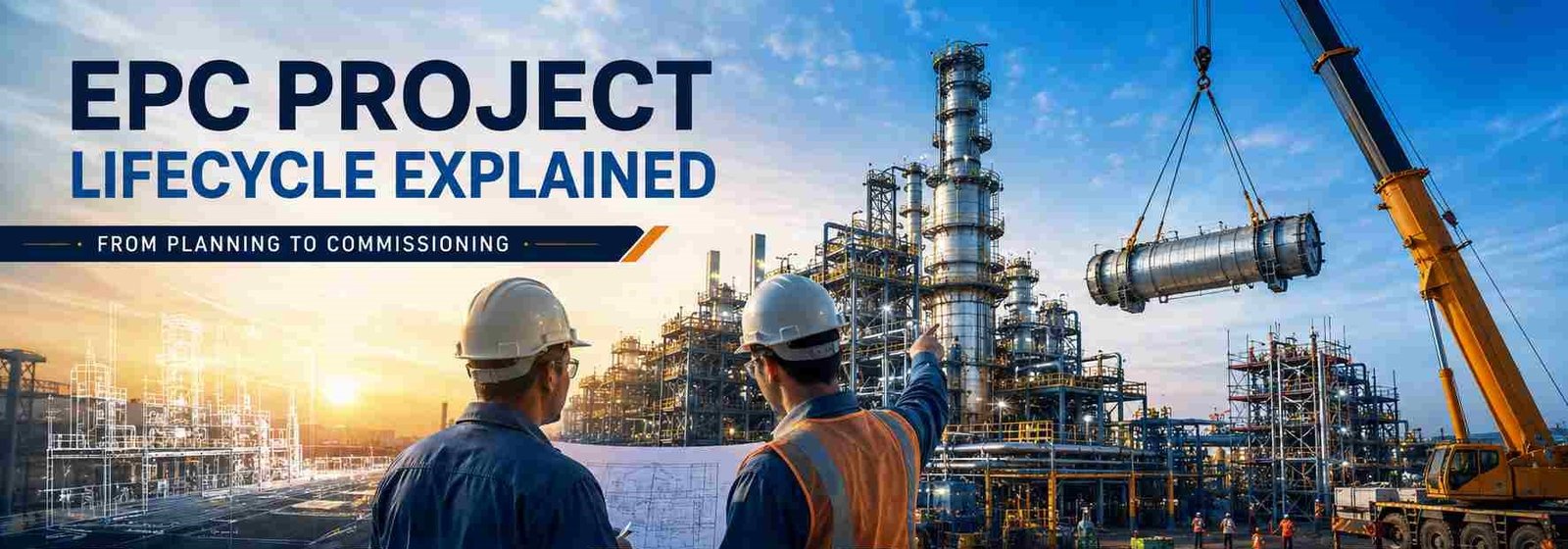
Stage 1: Project Planning
Every EPC project begins with detailed planning. This phase defines the project’s objectives, budget, scope, technical requirements, and execution strategy.
Key planning activities include:
- Site surveys
- Feasibility studies
- Risk assessment
- Environmental evaluation
- Budget estimation
- Project scheduling
- Resource allocation
Proper planning reduces uncertainties and helps identify potential challenges before project execution begins.
Businesses planning industrial developments can explore ADSD Group’s Engineering & EPC Services for complete project planning and execution support.
Stage 2: Engineering & Design
Once planning is complete, engineers develop detailed technical designs that guide procurement and construction activities.
Engineering includes:
- Civil Engineering
- Mechanical Engineering
- Structural Design
- Electrical Engineering
- Instrumentation
- Process Engineering
- Utility Planning
- 3D Plant Design
High-quality engineering minimises project risks while improving construction efficiency.

Stage 3: Procurement
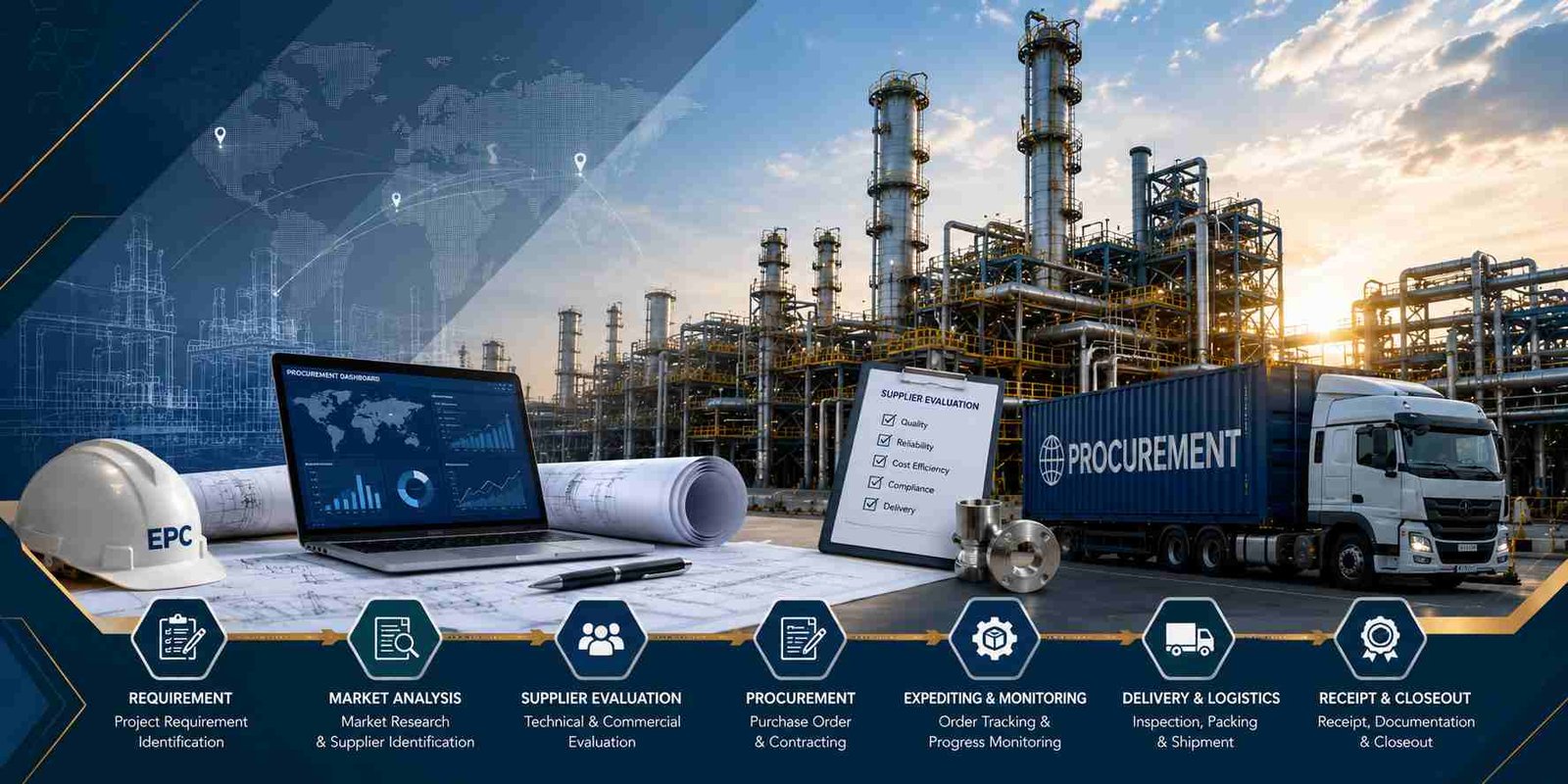
Once the engineering phase is completed, the project moves into procurement. This stage involves sourcing all the materials, equipment, machinery, and services required for construction. Effective procurement ensures that every component meets the project’s technical specifications, quality standards, and delivery timelines.
A well-managed procurement process includes:
- Vendor identification and evaluation
- Supplier selection
- Purchase order management
- Quality inspections
- Factory Acceptance Testing (FAT)
- Logistics and transportation planning
- Material tracking and inventory management
An efficient procurement strategy minimizes delays, controls costs, and ensures that construction activities continue without interruptions.
A reliable industrial supply chain plays a vital role in ensuring timely procurement, efficient logistics, and uninterrupted project execution.
Stage 4: Construction
The construction phase transforms engineering designs into a physical facility. During this stage, civil works, structural erection, equipment installation, electrical systems, piping, and instrumentation are executed according to the approved design.
Construction activities generally include:
- Civil foundation work
- Structural steel erection
- Mechanical equipment installation
- Electrical and instrumentation work
- Piping installation
- Utility system development
- Safety inspections
- Quality assurance and quality control (QA/QC)
Continuous supervision, safety management, and quality control are essential to keep the project on schedule while maintaining compliance with industry standards.

Stage 5: Testing & Commissioning
Before the project is handed over, every system and component undergoes comprehensive testing and commissioning. This phase verifies that the facility operates safely, efficiently, and according to the design specifications.
Testing and commissioning activities include:
- Mechanical completion checks
- Equipment testing
- Electrical system verification
- Instrument calibration
- Performance testing
- Safety inspections
- Trial operations
Proper commissioning helps identify and resolve any operational issues before commercial production begins.
Stage 6: Project Handover
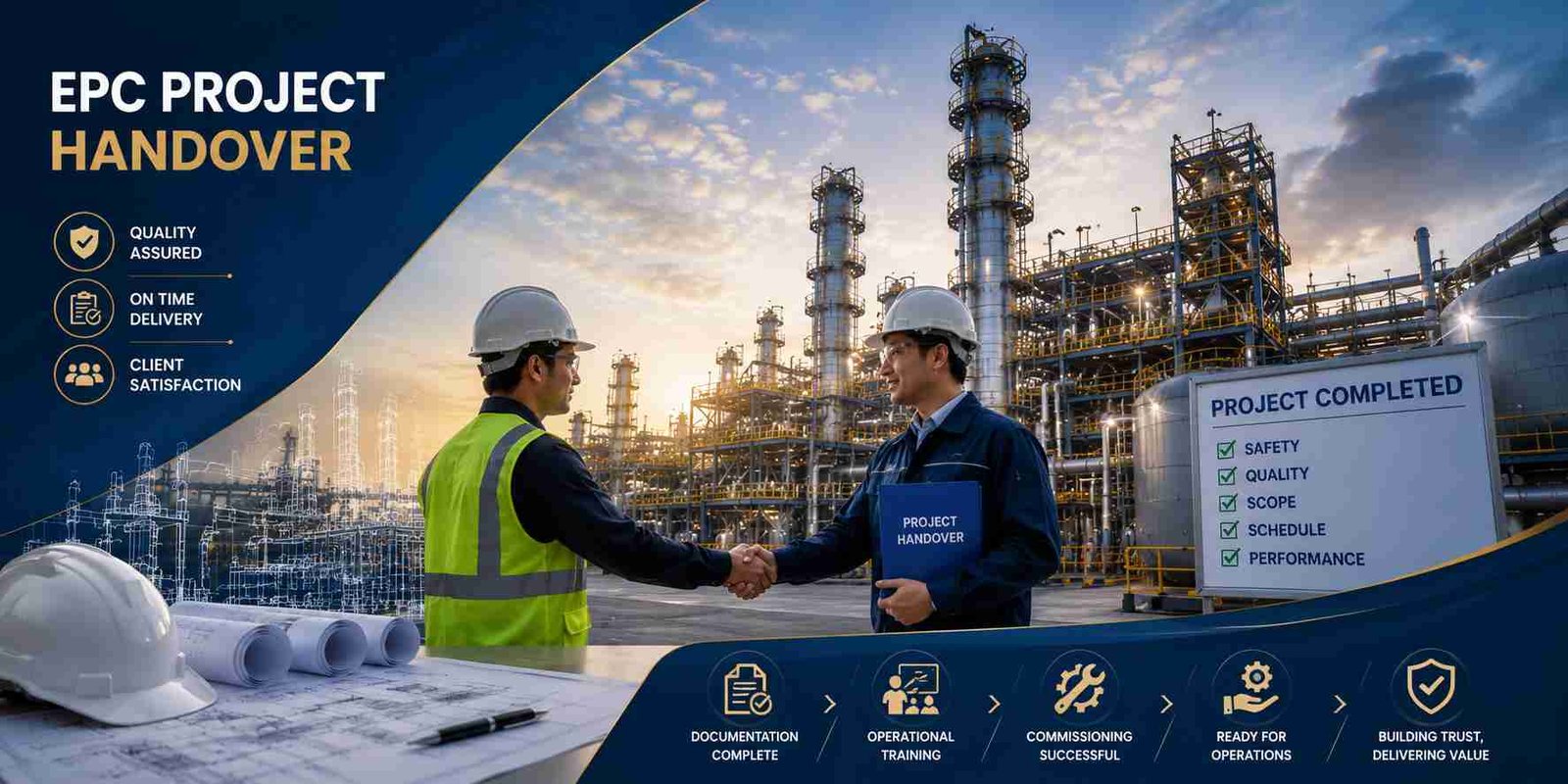
After successful commissioning, the completed facility is officially handed over to the client. At this stage, all documentation, operating manuals, maintenance procedures, and training sessions are provided to ensure smooth plant operations.
The project handover typically includes:
- Final inspection
- Documentation submission
- Operator training
- Performance verification
- Warranty support
- Maintenance guidelines
A successful handover marks the completion of the EPC project lifecycle and enables the client to begin operations with confidence.
Benefits of Following the EPC Project Lifecycle
Organizations that adopt a structured EPC project lifecycle gain several advantages, including:
- Better project planning and coordination
- Improved communication among stakeholders
- Higher quality standards
- Efficient procurement and logistics
- Reduced project risks
- Better cost control
- Timely project completion
- Increased operational efficiency
Many leading EPC organizations implement internationally recognized ISO quality management standards to maintain quality, safety, and operational excellence throughout the project lifecycle.
Common Challenges in EPC Projects
Despite careful planning, EPC projects may encounter challenges such as fluctuating material prices, supply chain disruptions, regulatory approvals, labor shortages, and changing project requirements. Experienced EPC contractors overcome these challenges through proactive planning, digital project monitoring, effective risk management, and strong supplier networks.
The Future of EPC Project Management
Modern EPC projects are increasingly driven by digital technologies such as Building Information Modeling (BIM), Artificial Intelligence (AI), Digital Twins, IoT-enabled monitoring systems, drones, and advanced project management software. These innovations improve collaboration, reduce project risks, and enhance overall efficiency.
According to the International Energy Agency (IEA), growing investments in sustainable infrastructure and clean energy continue to create new opportunities for EPC companies worldwide.
Conclusion
The EPC Project Lifecycle provides a structured and efficient framework for delivering complex industrial projects from concept to commissioning. By integrating engineering, procurement, construction, testing, and project handover under a single management approach, EPC companies ensure better coordination, improved quality, and timely project completion.
Whether developing manufacturing plants, chemical facilities, energy projects, or infrastructure developments, following a well-defined EPC lifecycle helps businesses reduce risks, optimize costs, and achieve long-term operational success.
Discover how ADSD Group delivers reliable Engineering, Procurement, and Construction solutions for industrial projects across multiple sectors.
Looking for a trusted EPC partner? ADSD Group delivers end-to-end Engineering, Procurement, and Construction (EPC) solutions tailored to industrial projects. Contact our team today to discuss your project requirements and discover how we can help you achieve successful project delivery.
FAQs
Q1. What is the EPC Project Lifecycle?
The EPC Project Lifecycle is the complete process of planning, engineering, procurement, construction, commissioning, and handing over an industrial project.
Q2. Why is project planning important in EPC projects?
Project planning defines the project scope, budget, schedule, and technical requirements. Proper planning helps reduce risks, improve coordination, and ensure successful project execution.
Q3. What happens during the procurement phase?
The procurement phase involves sourcing quality materials, equipment, and services required for construction while ensuring timely delivery and cost efficiency.
Q4. What is commissioning in an EPC project?
Commissioning is the process of testing and verifying that all systems and equipment operate safely and efficiently before the facility is handed over to the client.
Q5. Which industries commonly use EPC projects?
Manufacturing, chemical processing, oil & gas, renewable energy, pharmaceuticals, water treatment, and infrastructure industries commonly rely on EPC project delivery.

About Us
ADSD Consulting Private Limited
ADSD Adsorbents & Specialities
Private Limited
Delivering integrated Engineering, EPC, Consulting, Chemicals & Supply Chain and Activated Carbon solutions to Industries Worldwide.
Engineering & EPC Business
Chemicals & Supply Chain Business
Contact Us
- info@adsd.in
- +91 9958582437
-
Anthurium Office Space, 1103-1105, Sector-73, Noida,
Pin 201307, NCR Delhi, India
Download Brochure

About
ADSD Group, headquartered in Noida/Delhi (NCR), India, ADSD Group began its journey in 2017 with the establishment of its flagship company ADSD Consulting Pvt. Ltd.
Engineering & EPC
Supply Chain
Activated Carbon Business
Quick Link
Contact Us
- info@adsd.in
- +91 96506 93468
-
Anthurium Office Space, 1103-1105, Sector-73, Noida,
Pin 201307, NCR Delhi, India
Download Brocher
Copyright © 2026 All rights reserved. Powered by ADSD Group